Where Little Ones Learn to Love Good Food

At Kids’ Work Chicago Riverview

Preschool & Childcare Center Serving Chicago, IL

Here at Kids’ Work Chicago Riverview, we believe that utilizing a quality curriculum provides students of all ages with daily experiences that develop their growth and allow them to reach their potential.

Why is Nutrition Important in Child Development?

Nutrition plays a critical role in a child’s growth, brain development, and overall well-being. The foods children are exposed to early in life help shape their physical health and their relationship with food.

Providing balanced, nutrient-dense meals supports steady energy, healthy development, and learning during these important early years. Positive food experiences also help children build confidence trying new foods and develop healthy eating habits that can last a lifetime.

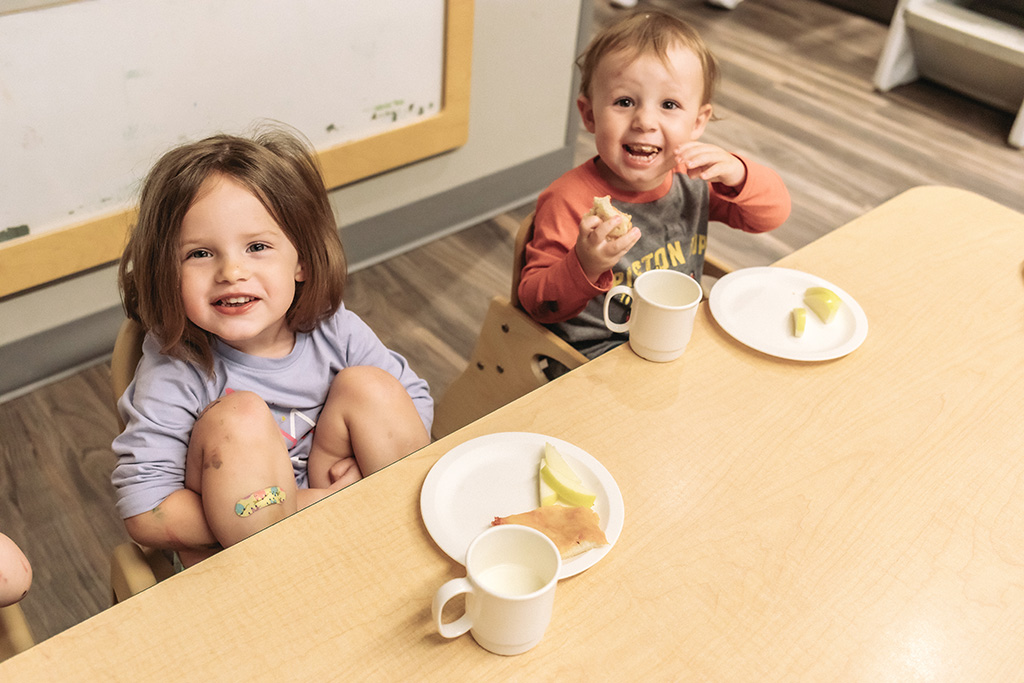
At Kids’ Work, we believe that mealtime is more than just nourishment. It is an opportunity to build healthy routines, develop independence, and create positive experiences around food.

Key Facts

  • Early childhood is a key time for developing lifelong eating habits.
  • Exposure to a variety of foods helps children become more comfortable trying new flavors and textures.
  • Balanced meals support brain development, physical growth, and sustained energy throughout the day.
  • Structured meal and snack times help regulate appetite and establish healthy eating routines.
  • Children benefit from a calm, positive environment where food is presented without pressure.

Proactive & Reactive Eating

Proactive

Proactive feeding focuses on building a healthy relationship with food from the beginning. By introducing diverse foods, creating positive mealtime experiences, and modeling healthy behaviors, children can develop confidence and curiosity around eating.

Early exposure to different tastes, textures, and food groups helps children become more open to trying new foods and reduces the likelihood of restrictive eating patterns later on.

Reactive

Sometimes children develop selective or picky eating habits as they grow. Reactive strategies focus on gently expanding food preferences and rebuilding positive associations with meals when challenges arise.

This may include reintroducing foods in different forms, maintaining consistent routines, and encouraging children to explore foods without pressure or stress.
Tips for Supporting Healthy Eaters

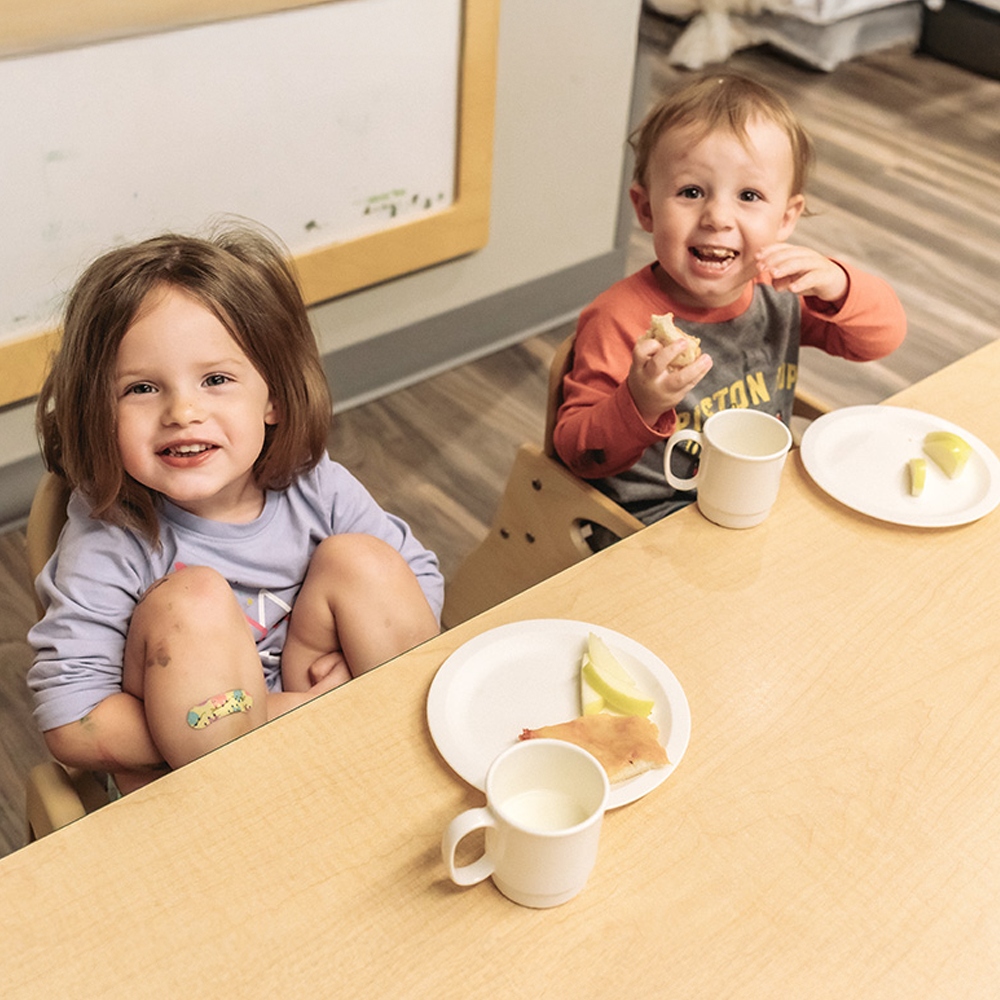
  • Offer foods with different tastes, textures, and colors.
  • Model trying new foods with enthusiasm and curiosity.
  • Maintain consistent meal and snack times each day.
  • Encourage children to explore foods at their own pace.
  • Respect children’s hunger and fullness cues.
  • Avoid pressuring children to finish everything on their plate.
  • Involve children in simple food-related activities when possible.

Infant Eating Information & Tips

Infants begin developing their relationship with food during the first year of life. As babies grow, they transition from milk to solid foods and begin exploring new tastes and textures.

Introducing a variety of safe, age-appropriate foods can help support sensory development and encourage healthy eating patterns.
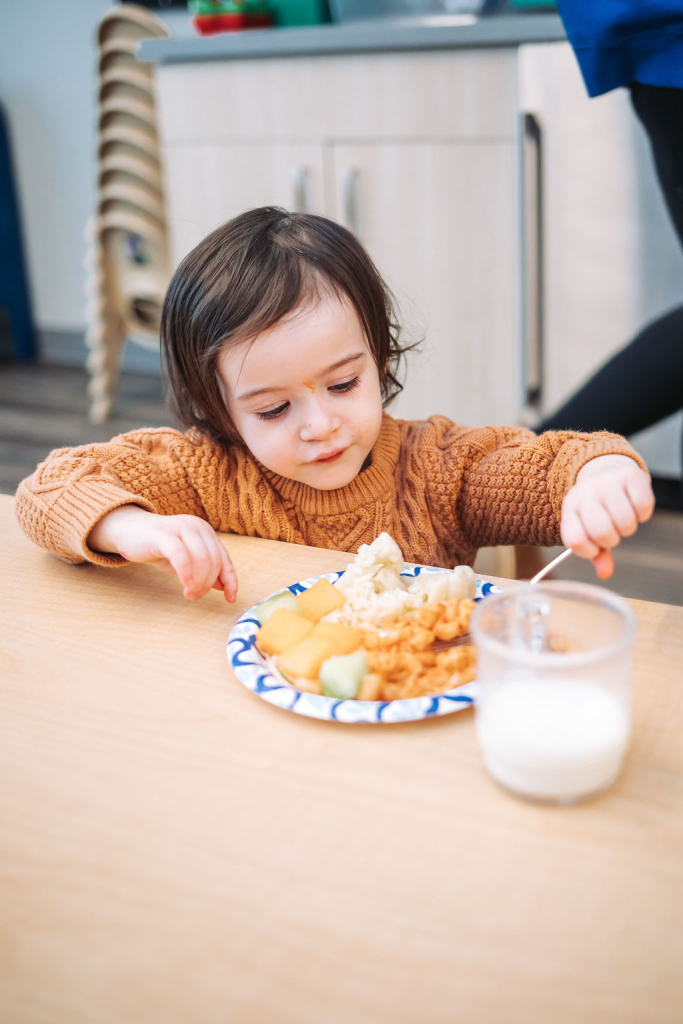
Tips for supporting infants during feeding:

  • Introduce new foods gradually and watch for any signs of allergies or sensitivities.
  • Offer soft, age-appropriate foods that babies can safely explore.
  • Allow babies to practice self-feeding when developmentally ready.
  • Encourage exploration of different textures and flavors.
  • Follow each infant’s developmental readiness and feeding cues.

Toddler Eating Information & Tips​

Toddlers are naturally curious but may also go through phases of selective eating. During this stage, consistent routines and positive food exposure are especially important. Providing balanced meals and maintaining a calm, supportive environment helps toddlers feel comfortable exploring foods while building independence.

Tips for toddlers:

  • Continue offering different types of food even if they are initially refused.
  • Keep meal and snack times consistent each day.
  • Encourage self-feeding and the use of utensils.
  • Offer reasonable portions and allow children to ask for more.
  • Avoid labeling foods as “good” or “bad.”

Preschool/Jr. Kindergarten Eating Information & Tips

As a child develops more self awareness and independence, they may begin to refuse foods and make repetitive meal requests. Using your child’s desire for control in a positive way is a great way to flip the script on picky eating!

Tips for preschoolers and Jr. Kindergarteners:

  • Involve them in meal planning, look at child friendly recipe books together and let them choose a dish, help you with shopping, and prepare the meal.
  • Allow them to help with daily meal prep; there are child friendly chopping tools that allow them to easily slice bananas or peppers. Encourage them to spread with child-friendly knives, stir ingredients, and assist with simple tasks like rinsing fruits or placing items on a plate.
  • Discuss textures and tastes at mealtimes & how our tastebuds change over time and with exposure. You can also discuss how healthy foods benefit their bodies. Children of this age are so curious and love to delve into the “why” behind things, even eating foods!

Meal Plan at Kids’ Work Chicago Riverview

Our infant meal plan and catered meals for toddlers through Jr. Kindergarten classrooms are designed to support healthy growth while introducing children to a range of nutritious foods during an important stage of development.

At KWCR, we follow age-appropriate nutrition guidelines and focus on providing balanced meals that include fruits, vegetables, proteins, and whole grains.

We also practice family-style meal service once children reach the appropriate developmental stage, allowing them to participate in the mealtime experience. During meals, children use real plates, cups, and utensils and are encouraged to serve themselves with assistance when appropriate. This approach helps build independence, social skills, and confidence around food.

Mealtime at KWCR is also a time to practice responsibility and community. Children participate in simple tasks such as helping set up the table and cleaning up after meals, which reinforces routine, cooperation, and respect for shared spaces.

Our goal is to create a positive, structured environment where children can explore food, develop healthy habits, and build lifelong skills around nutrition. By building a mindful meal program into your child’s daily routine here at Kids’ Work, we save you time and energy, allowing you to spend more quality time with your child instead of coordinating items to pack for their day!
What we provide

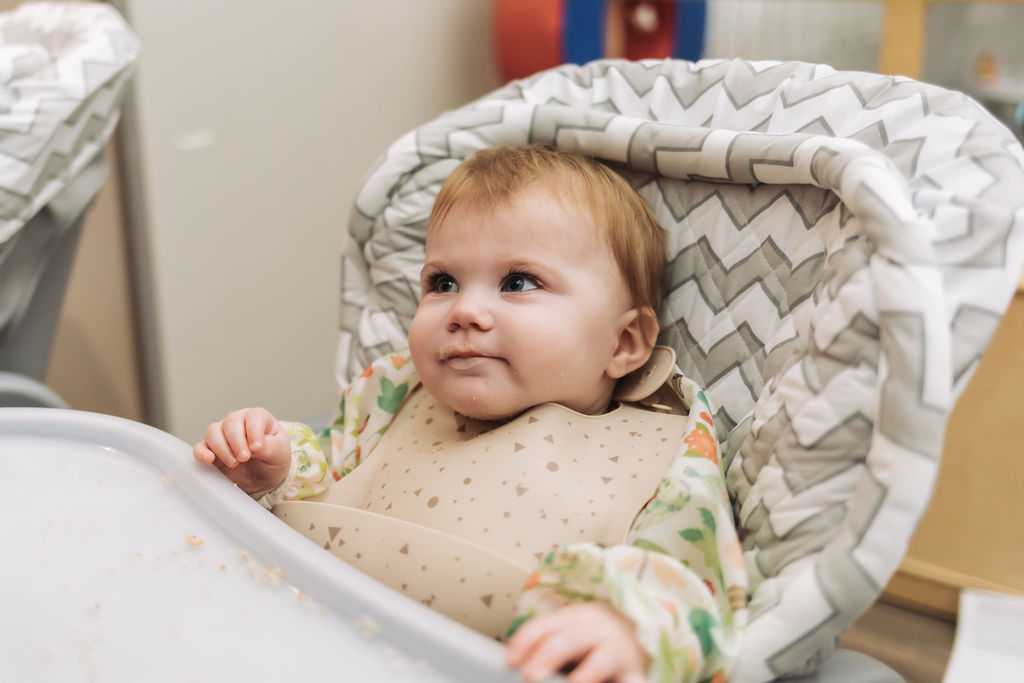
  • Infants: We offer a unique meal plan at a small additional fee. Starting at 6 months, we can provide daily purees and snacks. At 12 months, babies can receive infant portions of our organic catered meals!

  • Toddlers – Jr. Kindergarten: All students receive a breakfast snack, lunch, and afternoon snack, along with organic whole milk, at no additional cost. (Please note that our catering company works hard to provide organic whole milk but cannot always guarantee supply.)

  • We work with your child’s needs to ensure safe and healthy meals. We utilize an Allergy Action Plan to work with the catering company to accommodate allergies and food sensitivities.

    Additionally, if your family has a meal requirement (vegan, vegetarian, etc.) the catering company will provide alternative meal options!

  • On birthdays, we bake organic, allergy friendly muffins for students to share in the classroom!

Have a question?